
Industry Insights · October 2026
Cabinet Hardware Finishes & Plating Guide 2026: Nickel, Chrome, Matte Black, Antique Brass, Brushed & PVD
Two hinges, same size, same opening angle, same factory — one costs 12% more than the other. Often the difference is not the metal but the surface: the number of plating layers, the thickness of the coating, or the colour the buyer asked for in one word. Finish is where cabinet hardware is easiest to under-specify and hardest to repair once the container has sailed.
This 2026 guide covers the finishes we build into cabinet hardware — zinc plating, nickel, chrome, matte black, antique brass, brushed and satin, PVD and powder coating — plus what drives cost, how to read a salt-spray claim, how to specify a finish and how to inspect it.
Finish is a specification, not a colour
“Nickel” and “matte black” are not specifications on their own: the same two words can describe a decorative flash that wears through in a season and a coating that survives a decade of kitchen use. Pin down five things before comparing quotes.
- Base metal. Zinc alloy, carbon steel, stainless 201/304/316 and aluminium each take finishes differently, and some finishes are simply not possible on some substrates.
- Process route. Electroplating, anodizing, PVD and powder coating are different chemistries; choosing the colour first and the process second is how projects end up with a finish the factory cannot guarantee.
- Coating thickness. Plating is measured in micrometres (µm). Two finishes with the same colour name and different thickness behave differently under wear and salt spray — thickness is the number worth writing on the order.
- The standard and the test. “48-hour salt spray” without a standard is marketing. Ask for the standard (ASTM B117 or ISO 9227) and the item tested.
- The reference sample. In any dispute about colour, the only authority is the signed sample.
Get those right and finish becomes a line on the specification sheet a factory can hold. Browse the finished ranges in our cabinet hardware category.
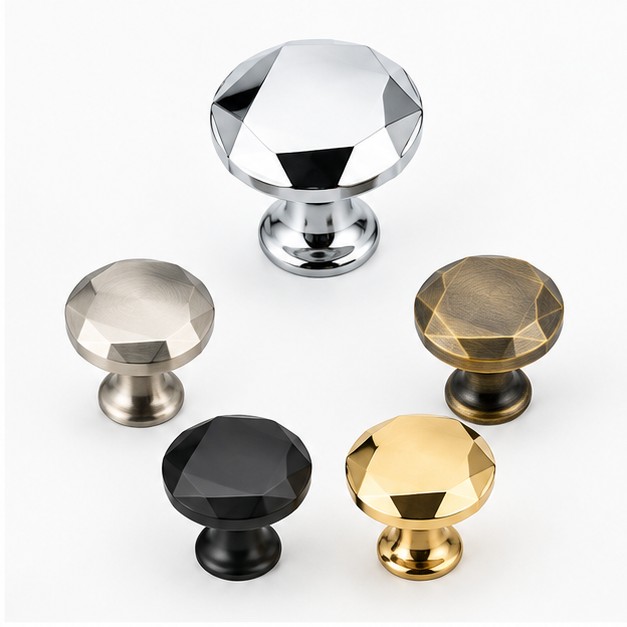
The finish families we supply, and where each one belongs
Zinc plating
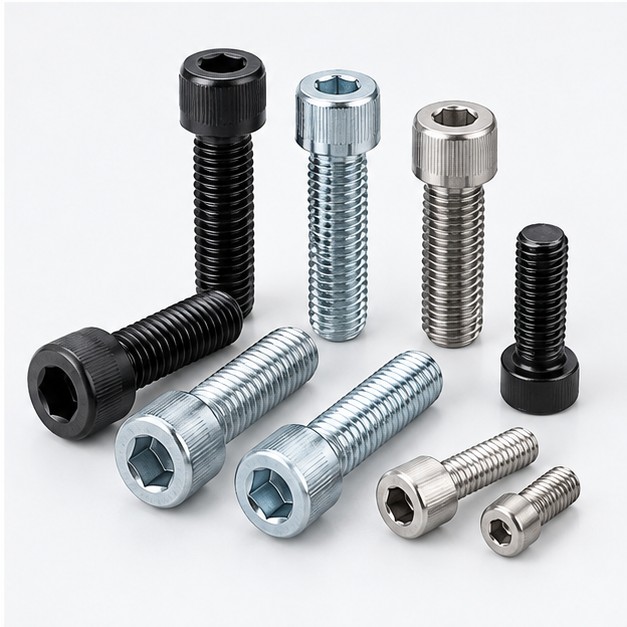
The workhorse of the trade: economical, corrosion-resistant enough for dry interiors, and a sound base for a top coat. It is the default on self-tapping screws, machine screws and bolts and most stamped parts. Black electrophoresis is the darker sibling — a black film over zinc, used on two-fold side-mount slides. Zinc suits the volume end of the market; it is not the answer for a humid bathroom.
Nickel plating
Bright, warm, hard and the most common premium look indoors. Our concealed hinges are nickel as standard, as are hex socket furniture screws where a brighter fastener is wanted. Nickel sits well on steel and zinc alloy, wears evenly and resists fingerprints better than polished chrome. In humid markets, treat it as decorative and move the corrosion duty to the base metal.
Chrome plating
The hardest shine, and the classic on zinc-alloy knobs and Zamak die-cast fittings. Chrome is a multi-layer system — copper, then nickel, then a thin chromium top layer — and quality lives in the layers underneath, not the glare: a two-layer shortcut looks identical on the sample and dulls months later on the door. It also exposes base-metal quality, because a pit in a casting becomes a blister in the plating.
Matte black
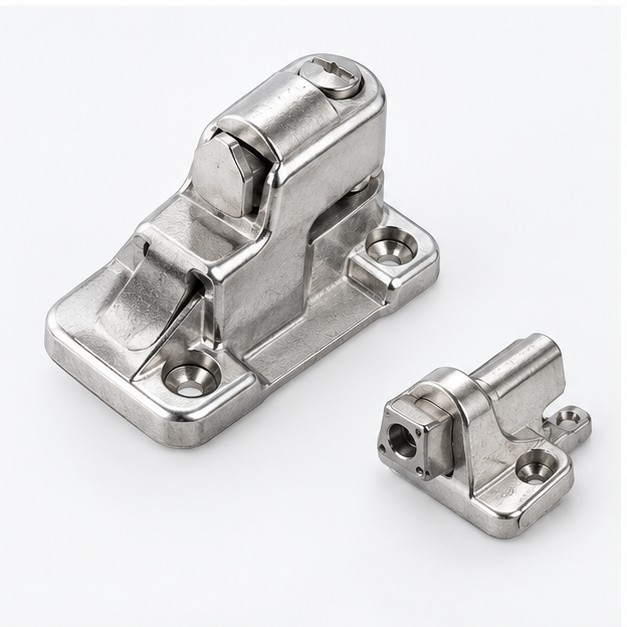
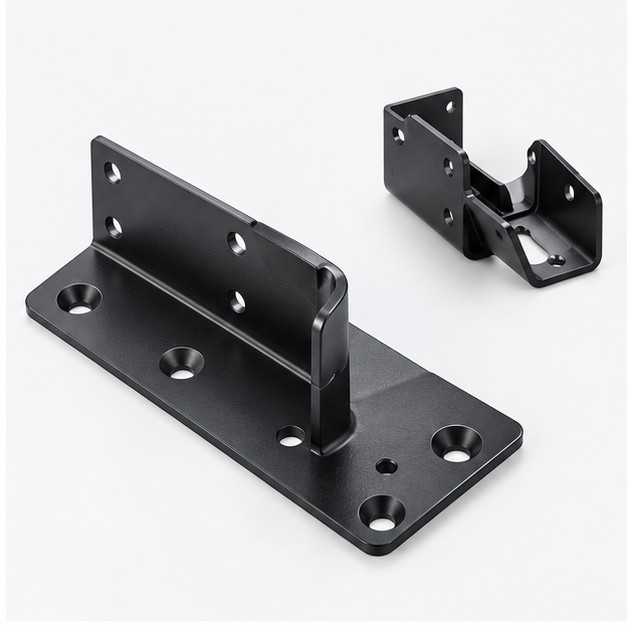
From trend to default. Matte black is made several ways — powder coating, plated black, electrophoresis or PVD — and the differences show up in wear and touch: a powder-coated U-shape pull and a PVD-black version of the same bar are not the same product. It hides handling marks and suits handleless and industrial interiors, which is why it now appears across handles, hinges and brackets. Confirm the process, not the colour.
Antique brass and bronze
Warm and deliberate, in growing demand for classic and transitional kitchens. Antique is produced by plating a brass or bronze layer and knocking it back — brushing, oxidising or lacquering — so the colour lands in a warm mid-tone between polished brass and dark bronze. Our zinc-alloy knobs and glass-door hinges come in antique and gold, and die-cast fittings in chrome or antique. It is the most sample-dependent finish of all: batch variation is normal, so approve a physical sample and state its reference.
Brushed and satin finishes
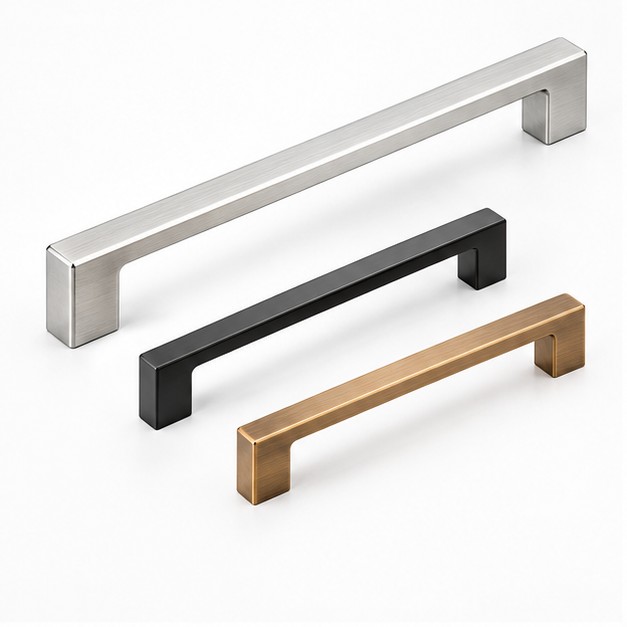
Brushed is mechanical, not a coating: the part is abraded in one direction to a controlled grain, then protected. It reads as stainless even on zinc alloy, shows fewer fingerprints than polished surfaces and repairs better — a light re-brush hides a scratch that would need re-plating on a polished part. Our T-bar handles, U-shape pulls, full-height aluminum handles and wardrobe rails come in brushed or satin versions. Specify grain direction and roughness: “brushed” can mean a fine satin or a pronounced hairline.
PVD finishes
Physical vapour deposition is where the premium colour market has moved: a thin, hard film — gold, black, rose gold, gunmetal — deposited onto stainless or plated steel in a vacuum chamber. It holds colour far longer than lacquered brass and is the usual answer for high-traffic hospitality hardware in gold or black. It is not a commodity finish: availability depends on the substrate, the item and the chamber size, so it is quoted per part. Confirm the exact item, the layer stack and the wear test on that item.
Powder coating
The economical route to a solid colour: powder applied electrostatically and cured into a durable film, in any RAL shade. It hides minor defects, covers edges and holes fully, and matches easily across large volumes. Our heavy-duty shelf brackets are powder coated white or black, and stamped metal brackets take zinc plating or powder coat. At 60–100 µm it is thick — good for corrosion, hard on tolerances: threads, fits and countersinks need masking. Specify RAL number, gloss level and masked areas.
Anodized aluminium
The natural companion to aluminium handles and profiles: an oxide layer grown out of the metal itself, so it cannot peel like a coating. Colours run from clear and silver to black and bronze over a brushed base. Our 6063-T5 wardrobe handles and aluminium T-bar handles use anodized or powder-coated finishes. Seal quality and thickness decide how well the colour holds in coastal air.
Cost: what actually drives the price of a finish
- Base metal. Stainless costs more before any finish is applied; plating a casting costs more than plating a stamped strip.
- Layers and steps. Chrome’s copper-nickel-chrome stack, the brass under antique, a polish before and a lacquer after — each step adds labour and yield loss.
- Coating thickness. Thicker plating means more time in the tank and more chemicals, and thickness is usually the first thing quietly reduced when a price is beaten down.
- Surface preparation. Polishing, brushing and de-burring are manual, skill-heavy steps — where finish quality is really made, and where cheap quotes cut first.
- Colour and complexity. A solid RAL powder coat is inexpensive; two-tone antique, PVD gold and mirror polish are not.
- Volume and tooling. Plating and coating are priced in batches; die-cast and stamped parts carry tooling amortised across the order.
- Packing. A finish that survives the factory can still die in transit; the wrap level is part of the finish cost.
When two quotes for the “same” finish differ by more than a few percent, ask which of those seven lines changed.
Durability and salt-spray testing: how to read a claim
Salt spray is the industry’s shorthand for corrosion resistance, and the most abused number in the catalogue. Read every claim through four questions.
- Which standard? Neutral salt spray to ASTM B117 or ISO 9227 (NSS) is the reference method. “Salt spray tested” with no standard means nothing.
- Which item? Hours are quoted for a specific part, coating and thickness; a flat panel result does not transfer to a threaded screw or a die-cast knob.
- What counts as failure? White rust, red rust, blisters or a percentage of area — the definition changes the hours dramatically.
- Batch test or one-off? Ask for a dated report, and whether production is retested.
As an orientation: decorative indoor finishes are often qualified around 24–48 h NSS, a good functional zinc or nickel system around 96 h, and stainless or well-specified PVD above that. Use those as questions, never as promises. In humid and coastal markets, pair stainless parts with stainless screws — mixing metals sets up galvanic corrosion, and the joint corrodes faster than either part alone.
How to specify a finish on a purchase order
A finish line that a factory can actually build looks like this:
Base metal (e.g. ZAMAK 3 die casting / SPCC steel / SUS304) · Finish name (e.g. antique brass / matte black) · Process (e.g. plated, powder coated, PVD, anodized) · Colour reference (RAL number for powder; sample reference for metallic finishes) · Coating thickness where it applies (µm) · Corrosion target (e.g. 96 h NSS to ISO 9227) · Sample reference (date and number of the approved sample) · Masking (threads, fits, countersinks that must stay clear) · Packing protection (individual wrap / polybag / bulk).
Print that line, quote it on every repeat order, and attach the dated sample photo. Most finish disputes are not arguments about quality; they are arguments about a description that was never specific enough to be broken.
Quality checks that catch a bad finish batch
- Colour against the sample, in daylight. Use neutral light, not the factory’s yellow lamps; a match under sodium light can be two shades off outside.
- Adhesion. A cross-hatch or tape test on a sample part exposes flaking before it reaches a customer.
- Thickness. A coating-thickness gauge on the actual part at the thickness quoted — not a certificate from another batch.
- Edge and hole coverage. Coating is thinnest where geometry is sharpest; inspect cut edges, threads and countersinks, where rust starts.
- Blistering and pitting. Small raised dots or dull patches on cast and plated parts signal trapped gas or contaminated base metal.
- Batch consistency. Lay parts out and look for colour drift; a mixed order should match across items, not only within a box.
- Threads and fits after coating. Run a screw through a coated thread and check no countersink or sliding fit has closed.
- Packing. Confirm the layer that keeps finished parts from rubbing against each other in the carton.
Five finish mistakes that cost importers money
- Ordering “matte black” without naming the process — powder coat, plated black and PVD black are three products at three prices.
- Comparing quotations on colour while ignoring coating thickness and process steps.
- Accepting a salt-spray hour with no standard and no item behind it.
- Mixing stainless parts with plated screws in a humid market and blaming the finish.
- Forgetting packing: an unfinished container is not a finish claim, it is a scratch claim.
What this means for importers in 2026–2027
Three directions stand out. Matte black is now a baseline, not a trend, so buyers should specify the process rather than assume a quality level. Premium colour is consolidating around PVD, especially gold and black for hospitality and higher-end residential work — quoted per item, approved by sample. And finish consistency is becoming a purchasing skill: standardising finishes across a basket is the fastest way to cut complaints, so hinges, handles, brackets and fasteners arrive matching instead of each carrying its own interpretation of “black”.
Standard terms: MOQ from 500 pcs per item and finish (die-cast from 500, stamped from 1,000), trial quantities from 50 on most items, samples in 3–7 working days, bulk production 15–30 days after deposit, and mixed-container loading to keep freight efficient.
FAQ
Which finish should I choose for a humid or coastal market?
Choose stainless steel (304 or 316) as the base metal and pair it with stainless screws, then confirm the finish system on the exact item. Decorative plating alone is not a corrosion strategy in humid air, so state the destination climate when ordering.
How do I read a salt-spray claim?
Ask four things: the standard (ASTM B117 or ISO 9227 NSS), the exact item tested, the pass/fail definition, and whether it was a batch test or a one-off. A number without a standard and an item is a marketing claim, not data.
What is the difference between matte black and PVD black?
Matte black can be a powder coat, a plated layer or electrophoresis — economical, thick and easy to match. PVD black is a thin vacuum-deposited film, harder and more wear-resistant, used on premium stainless parts. They look similar on a sample board and behave differently in service, so name the process on the order.
Can you match a specific colour or an existing sample?
Yes — send the colour reference (RAL for powder) or a physical sample. Antique, brushed and metallic finishes vary between batches by nature, so we approve a signed sample before production and keep it as the reference for repeat orders.
What are the MOQ, sample and packing terms?
MOQ from 500 pcs per item and finish, trial quantities from 50 on most items. Samples in 3–7 working days; bulk production 15–30 days after deposit. Packing is confirmed per item — individual wrap, polybag or bulk — to protect the finish in transit.
Ready to build your finish specification for 2026–2027?
WFMingKun Hardware supplies cabinet hardware across the finish families in this guide — zinc plated, nickel, chrome, matte black, antique brass, brushed, PVD, powder coated and anodized — factory-sourced from partner factories in China, with tested batches, OEM/ODM support and export packing for distributors, importers and furniture makers.
Browse our cabinet hardware range, handles and knobs or custom metal parts, or send us your inquiry with your product list and finish requirements — you will get prices, MOQ and lead time within 24 hours. Prefer to talk first? Message us on WhatsApp: +86 187 5400 6560.