Industry Insights · September 2026
2026 Cabinet Hardware Outlook: Connectors, Brackets, Fasteners and Custom Metal Parts
Hinges and slides get the attention — but it is the hardware between the panels that decides whether a cabinet survives a decade of daily use. Cam locks, connectors, brackets and fasteners quietly carry the structural load of every cabinet and wardrobe, while custom metal parts make unusual designs possible in the first place. For importers and distributors, these “hidden” categories are also among the most profitable lines to stock, because every cabinet program needs them in volume, in every order, without exception.
This 2026 outlook covers the four categories buyers are consolidating right now — furniture connectors, brackets and supports, fasteners, and custom metal parts — with the specifications, quality checks and sourcing details that matter when you compare suppliers. They are also a reliable measure of a supplier’s real capability: anyone can sell a hinge, but holding tolerances, finishes and test data across hundreds of small parts takes factory discipline.
Connectors: the anatomy of furniture that lasts
Cam locks and dowels: the flat-pack standard
The cam lock and dowel set remains the backbone of ready-to-assemble furniture: a zinc cam, a steel bolt housing, a dowel and a screw pin, packed by the thousand and consumed by the pallet. The design rewards precision rather than power — a cam that grips exactly at a 90-degree turn produces a joint that pulls panels square and stays tight through hundreds of assembly and disassembly cycles.
When sourcing cam lock and dowel sets, check three numbers: the cam tolerance, the dowel diameter consistency, and the surface finish of the zinc. Buyers running automated assembly lines feel a 0.2 mm wobble immediately; hand-assembly workshops feel it a year later, in joints that refuse to stay tight. The best suppliers publish those tolerances and inspect them batch by batch — the rest just quote a price.
Two-in-one connectors and screw-in bolts
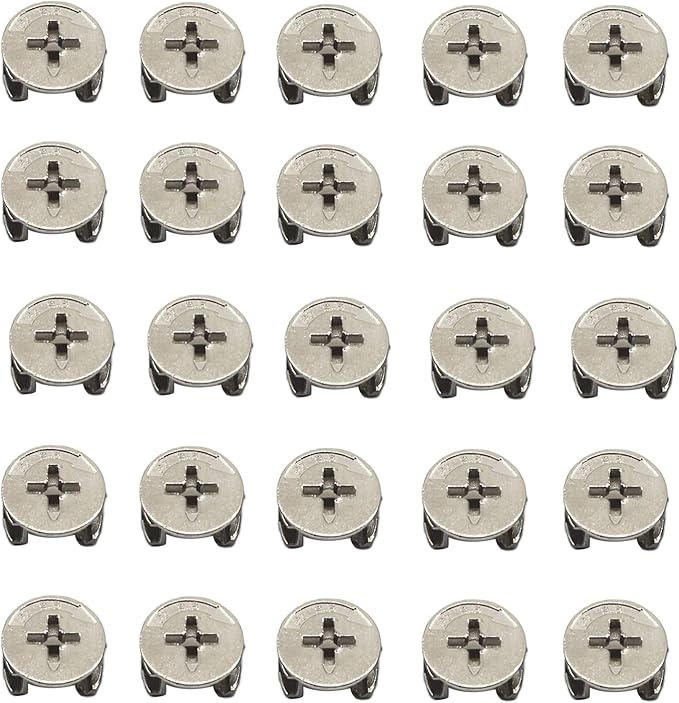
Two-in-one connectors have become the workhorse of factory-assembled cabinets. They combine the dowel’s locating function and the cam’s locking function in a single unit, cutting one drilling operation and several seconds from every joint. Across a production run of hundreds of cabinets a week, that is a meaningful saving in labour — which is why a two-in-one connector line with stable tolerances is the kind of supply relationship buyers build around for years.
For furniture that must be disassembled and rebuilt — trade-show stands, rental furniture, demountable shop fittings — the screw-in connector bolt family is still the benchmark. It is the mechanic’s solution: robust, inspectable on site, and repairable with a screwdriver.
Cross dowels and the quality of cast parts
The cross dowel nut is a three-gram part that can stop an entire production line when it fails: the internal thread must engage cleanly on the first turn, and the barrel must hold torque without splitting under load. This is where die-cast zinc fittings earn their reputation — consistent alloy, stable dimensions, and a finish that resists corrosion in humid climates.
For buyers in coastal markets, choose suppliers who can show salt-spray test hours for the finish, not just for the base metal. Cabinet hardware lives in kitchens and bathrooms; a part that hides behind the panel still ages like everything else in the room.
Practically, buyers evaluate a connector supplier on three things: whether tolerances are actually held (ask for batch inspection records, not promises), whether the finish survives the climate at destination, and whether reorders ship from the same tooling as the approved sample. Connector quality is invisible in a showroom and very visible six months after installation — which is exactly why it builds, or breaks, a distributor’s reputation.
Connector kits: the consolidation story of the year
One clear shift in 2026: more importers order connectors as matched kits — cam, housing, dowel, screw and cover cap in one bag, sized per cabinet model rather than per component. Kits reduce counting errors at the factory, simplify warehouse management, and lock the whole joint to a single quality system. For distributors, the kit format also lifts average order value without adding a single SKU to the catalog.
Brackets and supports: where cabinets meet walls and floors
Wall cabinets weigh more than most estimators assume — and the bracket is where the failure would happen first if the part is underspecified. A heavy-duty shelf bracket program in 2.0 mm to 3.0 mm steel, with tested load ratings and consistent coating thickness, covers the range from kitchen wall cabinets through to warehouse shelving.
Load ratings deserve a careful conversation with your supplier. Ask for the tested rating of the exact SKU, not the product family: a bracket’s rating falls quickly when gauge thickness, weld size or hole pattern are reduced to save cost. A two-to-one safety factor on the worst-case load is the working rule for wall cabinets.
For stocking decisions, a practical rule is to carry three bracket families: a light L-angle for the general market, a mid-weight shelf bracket for kitchens, and a heavy line for the industrial customers that always appear. Between them they cover the load spectrum with minimal inventory overlap.
The L-angle bracket family remains the versatile secondary line: reinforcement corners, support frames, furniture leg assemblies and the repair jobs every contractor knows. Stocking multiple sizes and finishes costs little, and it converts a customer’s urgent project into your repeat order. For heavier duty, stamped metal brackets produced to drawing give cabinet makers a factory-standard part at a fraction of machining cost.
Floor cabinets and vanities increasingly ship with furniture support legs — adjustable feet in steel or reinforced nylon that handle uneven floors. For exporters this small part is a packaging hero: it lets a cabinet ship as flat as possible while promising easy, level installation at destination.
Wardrobe programs rely on one more bracket family: wardrobe rail and flange sets, where the flange’s wall-fixing plates and the rail’s finish directly shape what end users perceive as wardrobe quality.
Fasteners: small parts that decide assembly quality
Fasteners are where factories and installers sum up a supplier. Three families carry most of the volume:
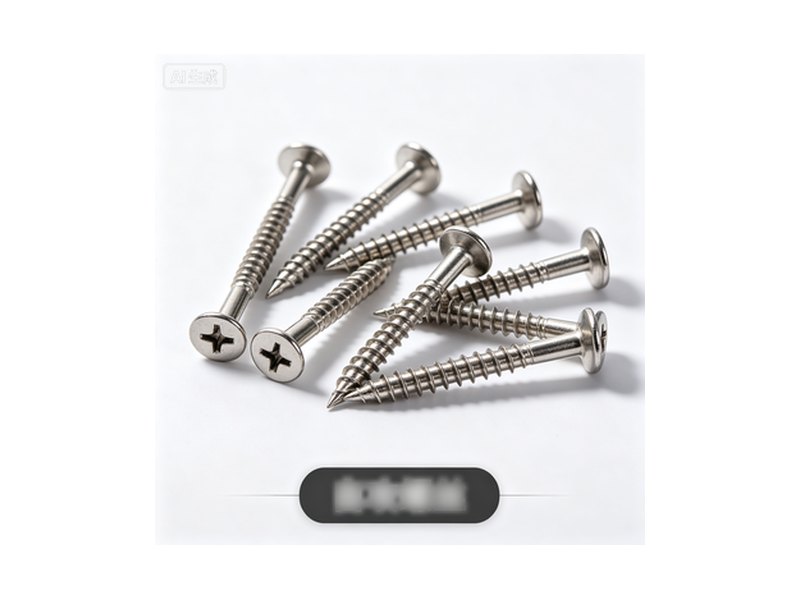
- Self-tapping screws — the assembly default for wood, MDF and panel products. Demand consistent point geometry and thread sharpness, so the screw neither splits the panel nor strips under high-torque tools.
- Machine screws and bolts — for hardware fixing and structural connections; specify hardness, thread standard and finish by application.
- Hex socket screws — for furniture frames, fittings and machinery; socket depth (how well the key engages) and anti-corrosion performance are what separate suppliers.
Add pop rivets for sheet-metal assemblies, and you have a complete fastener program for cabinet production.
Three specifications separate a good fastener line from a cheap one: coating (zinc-plated, with defined salt-spray hours), dimensional consistency (thread gauge inspection per batch), and hardness (rated, not guessed). Buyers who chase the lowest unit price on fasteners usually pay again — in returns, tool damage and rework — long before the year is out.
A word on sourcing fasteners cheaply: the category punishes shortcuts more than any other. A thread that strips under torque damages the customer’s panel and their opinion of your brand at the same time. Instead of reducing specification, reduce cost the honest way — consolidate sizes, order by the pallet, and combine fasteners with the rest of the hardware order so they travel in freight you are already paying for.
Custom metal parts: CNC, stamping and die-casting
Every well-run hardware program eventually encounters a part no catalog can supply: a non-standard corner bracket, a proprietary connector, an aluminum housing that must fit a customer’s frame exactly. This is the fastest-growing request category we see from importers — and in 2026 it is no longer only the big brands asking.
Three manufacturing routes cover most custom parts:
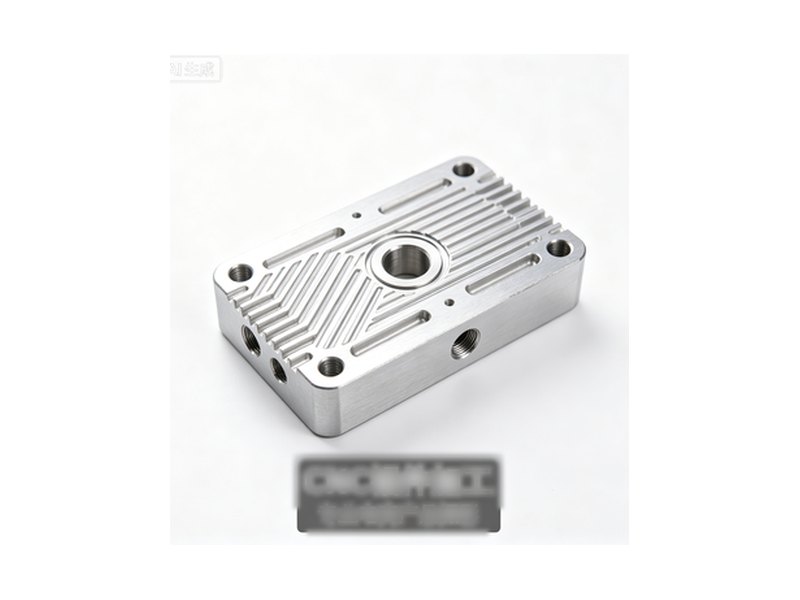
- CNC machined aluminum parts — best for complex geometry, tight tolerances and low-to-medium volumes; the route for precision fittings and mechanical components.
- Stamped metal brackets — the cost king at volume: progressive-die stamping for brackets, plates and clips, once tooling is justified.
- Die-cast zinc fittings — for connectors and components that need detail, weight and strength in a single casting.
Two practical notes for first-time custom orders. First, agree the drawing and tolerance class in writing before tooling starts; a good supplier will give design-for-manufacturing feedback at this stage, not after the first run of scrap. Second, always ask for a first-article sample before mass production — measure it against the drawing, confirm the finish, then release the order. A supplier who welcomes both steps is a supplier you can scale with safely.
On cost, expect the familiar trade-off: tooling is a one-time investment, unit cost falls with volume, and the break-even between stamping and machining usually sits in the mid thousands of pieces. A supplier worth working with will model that break-even with you honestly — and will say so when a drawing should be simplified before tooling is cut.
Quality checks before you order
Across all four categories, the same short checklist protects your program:
- Test data — salt-spray hours for finishes; load ratings for brackets and supports; torque values for connectors and fasteners.
- Inspection routine — pre-shipment inspection at a stated AQL (1.5 is a common baseline), with a batch report you can file and quote when a customer asks.
- Certification — ISO 9001 at minimum, plus CE / RoHS / REACH documentation where the product or your market requires it.
- Packing samples — the carton your customer will actually receive, sized and reinforced for mixed loading.
These four items are worth more negotiation time than the last two percent of unit price. Keep the same checklist for every category and every reorder; the disciplines that catch a bad batch early are the ones that keep a distributor’s reputation clean.
What this means for importers in the Middle East, Central Asia and Southeast Asia
The demand signals behind these categories travel well. Kitchen and furniture makers across the Middle East, Central Asia and Southeast Asia are assembling at a faster pace than they are expanding their supplier lists — which means the winning strategy for distributors is depth: a supplier who can ship connectors, brackets, fasteners and slides in one mixed container, with one set of documents and one quality standard.
Small metal parts are also the easiest categories to combine: their weight is low, their value density is high, and their packaging is compact. For an importer testing a new category, a fastener or connector line is the cheapest possible way to expand a container without expanding risk. That is also why our own export programs for these categories lean on mixed cartons and matched kits — the format that keeps small-part orders profitable for both sides of the trade.
Sourcing shifts to plan for in 2026-2027
- Consolidation across categories. Buyers keep reducing supplier count; a supplier who can quote hinges, connectors, brackets and fasteners from one trade operation removes four purchase orders’ worth of administration and risk.
- Complete kits instead of loose parts. Matched sets — connector plus dowel plus screw, bracket plus bolts — let factories assemble faster and let distributors hold fewer SKUs.
- Quality evidence as standard. Specification sheets and test reports are moving from “nice to have” to tender requirement, especially for government, hotel and retail projects.
- Mixed loading keeps growing. Small-parts categories are the natural fill for mixed containers, smoothing freight cost per unit across the whole order.
- Custom part demand rises every year. As furniture brands differentiate on design, the share of orders that include at least one custom metal component keeps climbing.
FAQ
What are cabinet connectors made of?
Most connector systems combine die-cast zinc bodies with steel pins and screws. Zinc castings are chosen for dimensional stability and cost; the steel parts carry the structural loads. For humid markets, verify the coating system on both components, and ask for salt-spray hours.
How do I choose a bracket load rating?
Match the rating to the worst-case load with a safety factor — typically 2:1 for wall cabinets. Ask the supplier for the tested rating of the exact SKU, not the product family, and request the test report that supports the number.
Can you produce parts from my drawings?
Yes — that is exactly what our custom metal parts program covers: CNC machining, stamping and die-casting from your drawings or samples, with first-article samples before production. Send a drawing with tolerances and your annual volume, and we will quote tooling and production together.
Do small parts have the same MOQ as main hardware?
Usually lower. Fasteners and connectors typically start from trial quantities, and many items can ship as part of a mixed container. Share your product list and destination port, and we will confirm MOQ and lead time item by item.
Ready to build your 2026-2027 hardware program?
WFMingKun Hardware supplies connectors, brackets, fasteners and custom metal parts alongside hinges, slides and handles — factory-direct from China, with tested batches, OEM/ODM support and export packing for distributors, importers and furniture manufacturers.
Browse connectors, brackets and fasteners, or send us your inquiry with your product list — you will get prices, MOQ and lead time within 24 hours. Prefer to talk first? Message us on WhatsApp: +86 187 5400 6560.