
Industry Insights · October 2026
Furniture Connectors Guide 2026: Cam Locks, Connector Bolts & KD Fittings for RTA Furniture
Every flat-pack wardrobe, desk and kitchen cabinet that ships in a box depends on a handful of small parts doing a precise job: pulling two panels together, holding them square, and staying tight through shipping, assembly and years of use. Furniture connectors are the quiet architecture of knock-down (KD) furniture — and for the trade, one of the steadiest categories in the hardware business, because every RTA line, every repair kit and every furniture factory consumes them by the bag.
This 2026 guide covers the connector families we supply — cam lock and dowel sets, 2-in-1 eccentric connectors, screw-in connector bolts and cross dowel barrel nuts — plus the sizing rules, quality checks and ordering details that decide whether a production line runs smoothly or fights the hardware. It follows the same approach as our drawer slide guide and wardrobe hardware guide: specify the joint first, then the part.
How knock-down furniture actually joins
A KD joint has one job: to behave like a permanent joint while remaining removable. The classic cam-and-bolt path does it in three moves:
- A bolt anchors into the first panel — screw-in types go into an edge or face hole, cam bolts sit in a pre-drilled seat.
- The bolt head passes through a hole in the second panel, where a cam waits inside its bore.
- Turning the cam locks onto the bolt head and pulls the panels together; dowels placed alongside keep the panels aligned so every hole lines up during assembly.
That mechanism explains the connector families in this guide: the 3-in-1 set (cam + bolt + dowel), the 2-in-1 eccentric (cam + bolt, economy), and the cross-bolt pair (screw-in bolt + barrel nut) for heavier or special joints. Choose the family by panel thickness, strength requirement and assembly method — then confirm the drilling pattern against your drawing. You can browse the whole range in our furniture connectors category.
Two practical decisions flow from the same mechanism. First, how much gets pre-mounted at the factory — cams and bolts can both be pre-inserted, so the flat-pack customer only turns a cam key or drives a screw; most RTA programmes pre-mount both halves. Second, the assembly sequence: which panel goes down first, where the cam key enters, and how the dowels guide the second panel into place. Connectors that match the sequence disappear into the build; connectors that don’t get blamed for “holes that are too tight”.
The connector families we supply
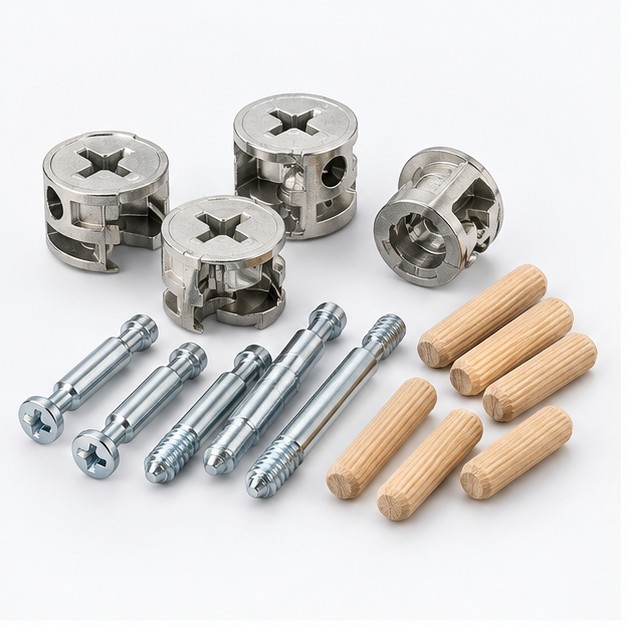
Cam Lock & Dowel Set (3-in-1)
The volume standard for flat-pack furniture. The set combines a zinc-alloy cam, steel bolt and wooden dowel: cams in 15×12 and 15×15 versions, bolts M6×34 and M6×50, dowels 6×30 — nickel plated, packed 100 sets per bag.
The cam bore and the dowel holes are the dimensions that must agree with your panel drawings; get those two right and assembly becomes a rhythm instead of a repair job. View the cam lock & dowel set.
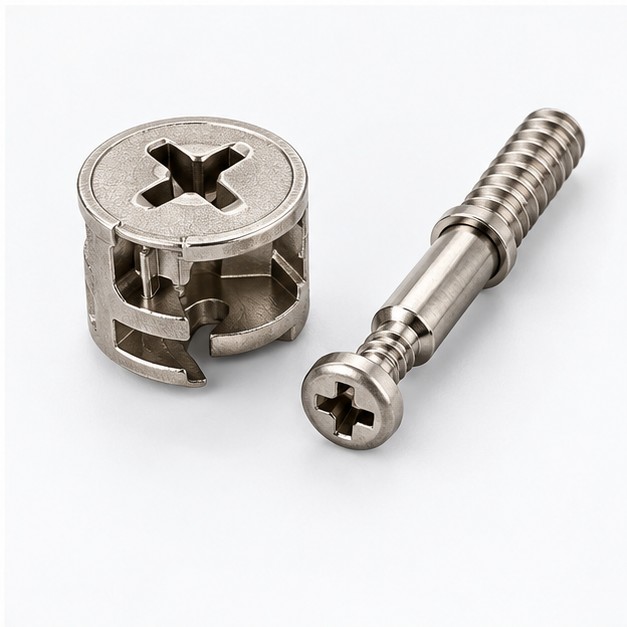
2-in-1 Eccentric Connector (Economy)
A Ø15 mm zinc-alloy cam with a Ø6/7 mm bolt — the economical path for standard 12–25 mm panels. Fewer components mean faster assembly lines and simpler stock control than 3-in-1 sets, which is why economy bedroom ranges and volume RTA programmes lean on it. View the 2-in-1 connector.
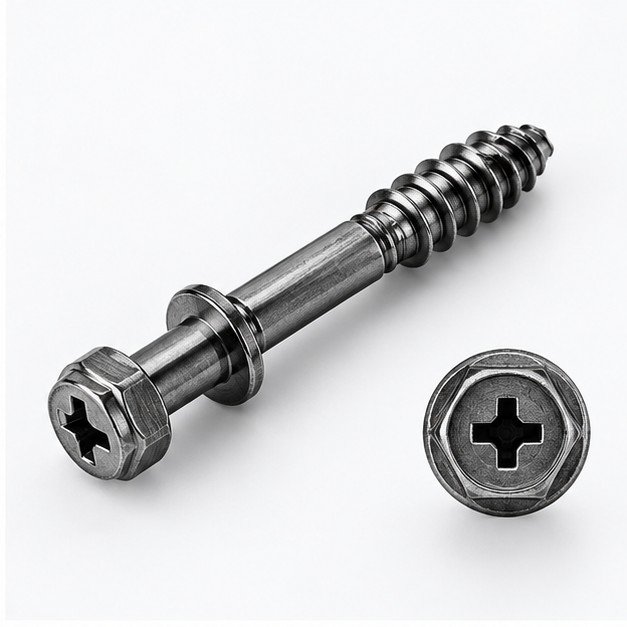
M6 / M8 Screw-In Connector Bolt
The bolt half of the cross-bolt joint: M6 and M8 threads, 30–70 mm lengths, carbon steel with zinc or black finish, hex or cross heads. It screws into the first panel and mates with a barrel nut for a strong, repeatable joint — the usual choice for bed frames, worktops and joinery that gets taken apart in the field. View the connector bolt.
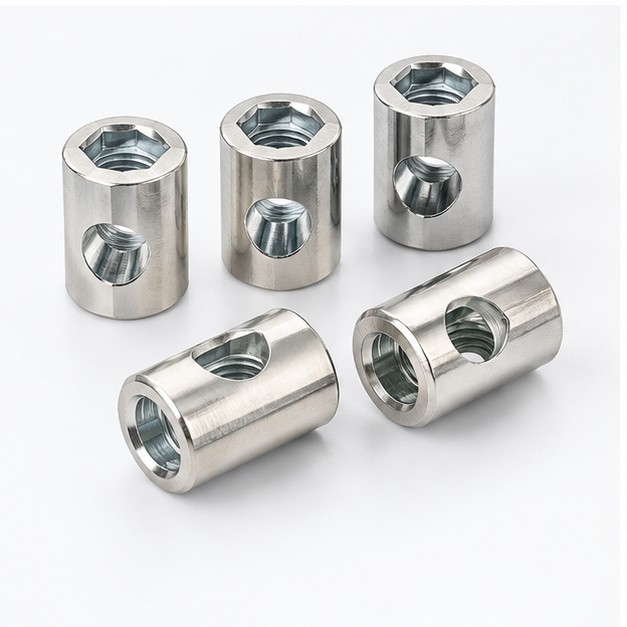
Cross Dowel Barrel Nut
The receiver: M6, M8 and M10 sizes in nickel-plated zinc alloy, with a 2.5 mm hex slot that lets the nut be aligned during tightening. Pair it with the screw-in bolt and the slot keeps assembly fast and reliable on the line. View the cross dowel nut.
Pair them like a joint kit, not a parts list
Connectors only work as pairs. The cam expects a bolt with matching head geometry; the barrel nut expects the right thread and a drilled cross-hole; dowels expect their bores to align after the panels are machined. Three practical rules keep a programme out of trouble:
- Cam + bolt. Match cam size (15×12 / 15×15) to bolt length (M6×34 / M6×50) for the panel thickness in hand — the pair is designed together, and sourcing the two from different programmes is where clamping problems start.
- Bolt + nut. Keep thread families together (an M6 bolt wants an M6 nut) and choose length to suit the drilled depth in your side panel.
- Dowels. They carry no clamping load — their job is alignment. But if dowels are undersized or bores drift, panels rack during assembly and every following step slows down.
The safest ordering method for a production line is to send the drilling drawing (or a cut sample) and let the supplier confirm the matching set: cam, bolt, dowel and nut confirmed as one kit against one drawing. That is how we quote connectors as standard practice — and it is why reorders stay assembly-friendly.
Ordering by the project, not by the piece
Connector demand is easy to forecast once the build is documented. Count the joints that use connectors per unit (cabinet, wardrobe, bed frame), multiply by the sets per joint, and add a small margin for assembly losses — that is the consumption per unit of furniture. Two habits turn the number into steady supply: keep one drilling pattern per product family, so a single connector size covers a whole catalogue; and align packing with consumption — bags of 100 for 3-in-1 sets suit line-side replenishment, boxes of 500 suit bulk stock.
For importers the same logic works on the sales side. A compact assortment in the two or three commonest sizes covers most repair and small-workshop demand, while OEM project orders are quoted against the drawing and volume. Connectors are also the easiest line to bundle: they add little to freight, and they put your name in front of every furniture maker who buys them.
Sizing rules that prevent assembly problems
- Panel thickness. Standard connector programmes cover 12–25 mm boards — the range our sets are quoted against.
- Cam bore. 15×12 and 15×15 cams cover the common bores; use the version your drilling pattern was designed around rather than mixing.
- Bolt length. M6×34 and M6×50 cover standard joints; cross-bolt programmes run 25–50 mm for panels and up to 70 mm for thick sections.
- Dowel size. 6×30 mm is the standard alignment dowel for these systems.
- Thread range for cross-bolts. M6 / M8 (and M10 nuts) cover furniture and fitting work; keep bolt and nut in the same thread family.
- Packing. 100 sets per bag (3-in-1), 500 sets or pcs per box (2-in-1, bolts, nuts) — retail-ready packing available for OEM programmes.
Quality checks that protect an RTA programme
- Clamping feel. Assemble a sample joint by hand: the cam should engage and lock the bolt head firmly through its rotation, with no slip once locked. This thirty-second test finds more real problems than any data sheet.
- Plating at the working surfaces. Nickel should reach the cam slot and bolt threads — rust starts where plating does not.
- Thread cleanliness. Run a nut down a bolt; rough threads signal poor tooling or leftover swarf, a leading cause of assembly-line stoppages.
- Slot alignment. The barrel nut slot must let the bolt align naturally, without forcing.
- Batch consistency. Reorders must come from the same tooling as the approved sample; cam feel and thread quality are where batch drift shows up first.
- Sample assembly. Build one complete joint — ideally a finished panel corner — before bulk acceptance. It is the cheapest insurance in the category.
Where connectors sit in the hardware list
Connectors rarely ship alone, and they shouldn’t be sourced alone either. A furniture programme buys hinges, drawer slides, drawer systems and fasteners alongside its connectors; consolidating them with one supplier removes several purchase orders per project, keeps finishes matched, and puts one team in charge when a drilling pattern needs to change. For importers building a catalogue, connectors are also the classic “add-on” line: low unit price, steady demand, and a natural entry into the furniture factory’s next order.
Repair and spare-part demand deserves its own line in the catalogue: a small counter box of cams, bolts and nuts in the commonest sizes sells steadily to workshops, resellers and end customers — and introduces the rest of the range at the same time.
Five mistakes to avoid
- Ordering cams and bolts separately without confirming the pair works together.
- Mixing connector batches from different tooling in one production run.
- Treating dowels as optional — without alignment, cam bores and bolt holes fight each other.
- Choosing on plating appearance instead of clamping behaviour and thread quality.
- Skipping the pre-production sample joint, then discovering the problem on the line.
What this means for importers in 2026–2027
RTA and flat-pack furniture keep expanding across Southeast Asia, the Middle East and Central Asia — furniture that ships in a box needs connectors in volume, and repair and replacement kits add a second demand stream. Buyers are consolidating: one supplier quoting connectors, hinges, slides and fasteners together removes several purchase orders per project. And spec discipline pays twice — lines that freeze their drilling patterns keep assembly fast across reorders, and their connector consumption stays predictable enough to plan stock.
Standard terms for the category: MOQ from 500 sets or pcs per size and finish, trial quantities from 50 on most items, samples in 3–7 working days, bulk production in 15–30 days after deposit, and mixed-container loading to keep freight efficient across the order.
FAQ
Which connector set fits my board thickness?
Our sets cover 12–25 mm panels: 15 mm cams (15×12 and 15×15) with M6×34 or M6×50 bolts and 6×30 mm dowels for standard boards. Send your drilling drawing and we confirm cam, bolt and dowel sizes against it.
3-in-1 or 2-in-1 connectors — which should I choose?
The 3-in-1 set (cam + bolt + dowel) adds dowel alignment and is the standard for quality flat-pack furniture. The 2-in-1 (cam + bolt) is the economical, faster-assembly option for standard joints — both use the same 15 mm cam bore family.
Can you supply components separately?
Yes — cams, bolts, dowels and cross dowel nuts ship as complete sets or as separate components, so you can stock exactly the parts your line consumes.
What are the MOQ and packing terms?
MOQ from 500 sets or pcs per size and finish, with trial quantities from 50 on most items. Standard packing: 100 sets per bag (3-in-1), 500 sets or pcs per box (2-in-1, bolts, nuts); samples in 3–7 working days.
Ready to build your connector programme for 2026–2027?
WFMingKun Hardware supplies cam locks, dowels, connector bolts and cross dowel nuts alongside hinges, drawer slides, handles and fasteners — factory-sourced from partner factories in China, with tested batches, OEM/ODM support and export packing for distributors, importers and furniture makers.
Browse furniture connectors and fasteners, or send us your inquiry with your product list — you will get prices, MOQ and lead time within 24 hours. Prefer to talk first? Message us on WhatsApp: +86 187 5400 6560.